High Arch Foot Symptoms: Why Shock Absorption Fails
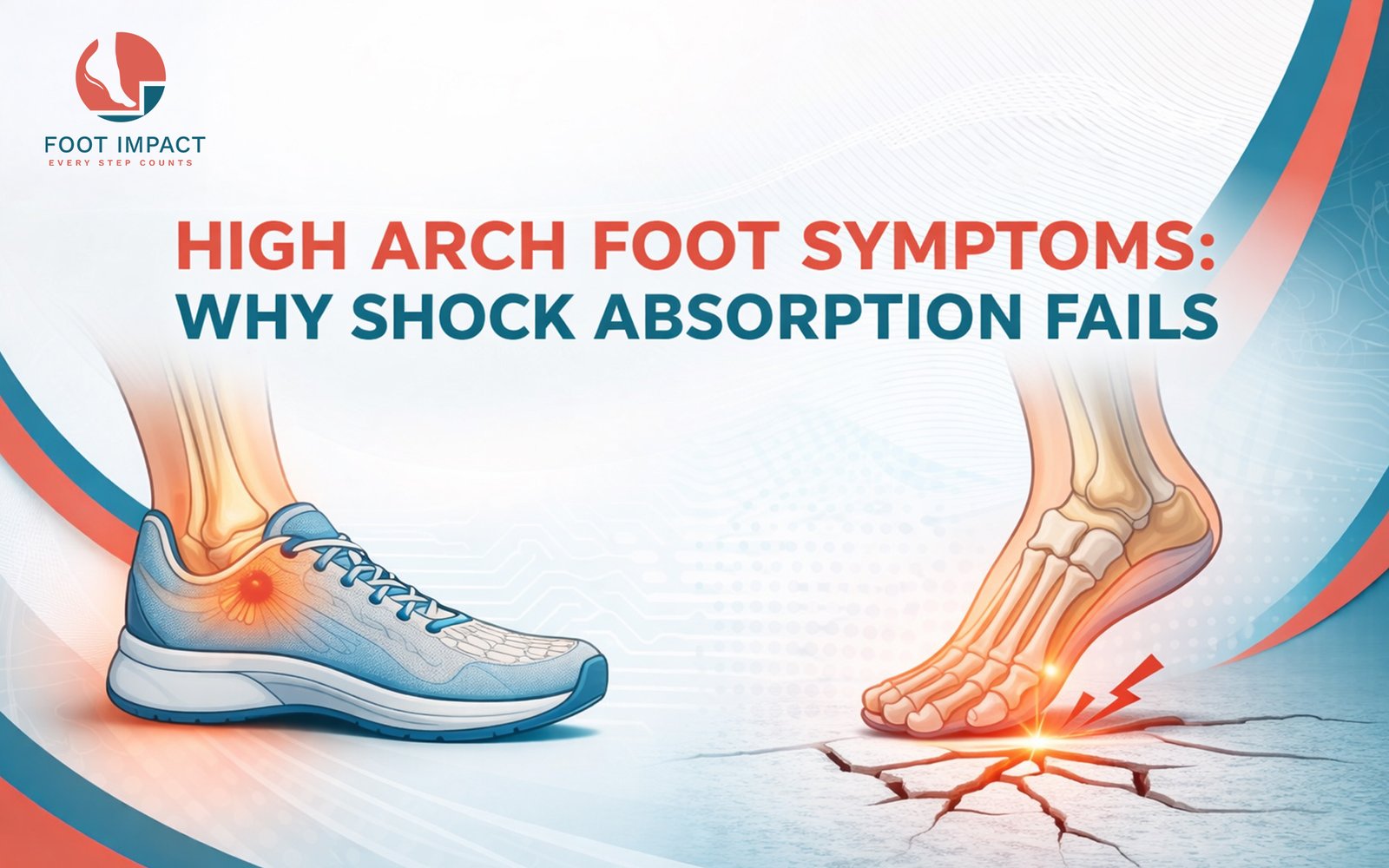
High arch foot symptoms often go unnoticed in the early stages. Many people assume foot pain is caused by long standing hours, improper footwear, or simple fatigue. However, when the foot has an unusually high arch — medically known as pes cavus — the mechanics of walking change significantly.
Unlike flat feet, which roll inward, high arches lead to underpronation foot pain, meaning the foot does not roll inward enough to absorb impact properly. As a result, pressure gets concentrated on the heel and ball of the foot. Over time, this poor shock absorption can cause persistent high arch foot pain, ankle instability, and even knee or back discomfort.
In this comprehensive guide, we will explain:
What high arch foot symptoms look like
Why shock absorption fails in cavus feet
Early warning signs you shouldn’t ignore
Long-term risks
Evidence-based cavus foot treatment options
If you’re unsure whether your foot pain is linked to arch structure, this article will help you understand the biomechanics and next steps clearly.
What Is a High Arch (Pes Cavus)?


A high arch foot, or pes cavus, is a condition where the arch of the foot is significantly elevated even while standing. Instead of distributing weight evenly across the foot, the body weight concentrates primarily on:
The heel
The ball of the foot (metatarsal heads)
According to the American Orthopaedic Foot & Ankle Society, cavus feet can be structural (present from birth) or linked to neurological conditions. Unlike flexible arches that flatten slightly during walking, high arches remain rigid, reducing the foot’s natural ability to absorb shock.
Why Shock Absorption Fails in High Arch Feet
To understand high arch foot symptoms, we must first understand biomechanics.
1. Reduced Surface Contact
In a normal gait cycle, the foot rolls slightly inward (pronation) to distribute force evenly. In high arches:
The foot remains rigid
It rolls outward (underpronation)
Impact forces are not dispersed
This leads to concentrated stress on specific pressure points.
2. Poor Muscle Shock Dampening
The plantar fascia and intrinsic foot muscles play a role in absorbing shock. A rigid high arch reduces flexibility, meaning these tissues cannot stretch and recoil efficiently.
3. Ankle Instability
High arches tilt the heel inward, increasing the risk of ankle sprains. According to research from the National Institutes of Health, cavus feet are associated with recurrent ankle instability and altered gait mechanics.
Early High Arch Foot Symptoms You Shouldn’t Ignore


Recognizing high arch foot symptoms early can prevent long-term damage.
Common Signs:
1. Pain in the Ball of the Foot
Because pressure concentrates here, many people experience burning or stabbing pain (metatarsalgia).
2. Heel Pain
High arches lack shock absorption, increasing strain on the heel pad.
3. Frequent Ankle Sprains
Due to instability and outward rolling.
4. Calluses Under the Ball or Heel
Excess pressure leads to thickened skin.
5. Toes Clawing or Hammertoes
Muscle imbalance may cause toe deformities over time.
6. Underpronation Foot Pain While Running
Runners with high arches often report pain along the outer edge of the foot.
If these symptoms persist for more than 2–3 weeks, professional evaluation is recommended.
High Arch Foot Pain vs Flat Foot Pain
Understanding this difference helps tailor the right cavus foot treatment plan.
What Causes High Arch Foot Symptoms?
High arches may develop due to:
Genetics
Neurological disorders (e.g., Charcot-Marie-Tooth disease)
Muscle imbalance
Previous injuries
The Mayo Clinic explains that neurological causes should be ruled out in progressive cases:
https://www.mayoclinic.org/diseases-conditions/cavus-foot/symptoms-causes
If high arch foot symptoms appear suddenly or worsen rapidly, medical evaluation is crucial.
Long-Term Risks of Ignoring High Arch Foot Pain
Untreated cavus foot can lead to:
Chronic metatarsalgia
Plantar fasciitis
Stress fractures
Knee pain
Lower back pain
Because impact forces travel upward, foot imbalance can affect the entire kinetic chain.
How Is Cavus Foot Diagnosed?
A podiatric evaluation usually includes:
Visual Arch Assessment
Gait Analysis
Pressure Mapping Test
X-rays (if structural deformity suspected)
At FootImpact, our detailed biomechanical evaluation helps identify underpronation foot pain patterns early.
You can explore our advanced gait analysis services to understand how walking patterns influence pain.
Cavus Foot Treatment: Evidence-Based Options


Effective cavus foot treatment depends on severity.
1. Custom Orthotics
Custom insoles redistribute pressure and improve shock absorption. Unlike generic insoles, they are designed based on your foot structure.
Learn more about our custom foot orthotics solutions for structural correction.
2. Shock-Absorbing Footwear
Shoes with:
Cushioned midsoles
Neutral arch support
Wide toe box
3. Strengthening & Stretching Exercises
Towel curls
Calf stretches
Ankle stabilization drills
4. Ankle Bracing (If Needed)
Helps prevent recurrent sprains.
5. Surgical Intervention (Rare Cases)
Only considered if conservative cavus foot treatment fails.
Can High Arch Foot Symptoms Be Prevented?
While you cannot change your arch structure genetically, you can:
Wear proper footwear
Avoid high heels for long durations
Use orthotics early
Strengthen foot muscles
Early intervention reduces the risk of chronic high arch foot pain.
When Should You See a Podiatrist?
Seek professional care if:
Pain affects daily activities
You experience repeated ankle sprains
Calluses become painful
Pain radiates to knees or back
Timely treatment prevents structural complications.
FAQs About High Arch Foot Symptoms
1. What are the most common high arch foot symptoms?
The most common high arch foot symptoms include heel pain, ball-of-foot pain, ankle instability, calluses, and underpronation foot pain during walking or running.
2. Why does shock absorption fail in high arches?
Because the foot remains rigid and does not pronate enough, impact forces are not distributed evenly.
3. Is high arch foot pain permanent?
Not necessarily. With proper cavus foot treatment such as custom orthotics and strengthening exercises, symptoms can be managed effectively.
4. Can high arches cause knee or back pain?
Yes. Poor shock absorption affects alignment and may lead to joint strain higher up the body.
5. Are high arches genetic?
In many cases, yes. However, some cases are linked to neurological conditions.
Conclusion: Don’t Ignore High Arch Foot Symptoms
High arch foot symptoms are more than occasional discomfort. Because shock absorption fails in cavus feet, repeated stress accumulates in the heel and forefoot. Over time, this can lead to chronic high arch foot pain, ankle instability, and posture-related complications.
The good news is that early intervention works. With proper biomechanical assessment, supportive footwear, and targeted cavus foot treatment, most individuals can walk comfortably and prevent long-term damage.
If you’re experiencing persistent underpronation foot pain, consider scheduling a professional foot evaluation. Addressing structural imbalance today can protect your mobility for years to come.