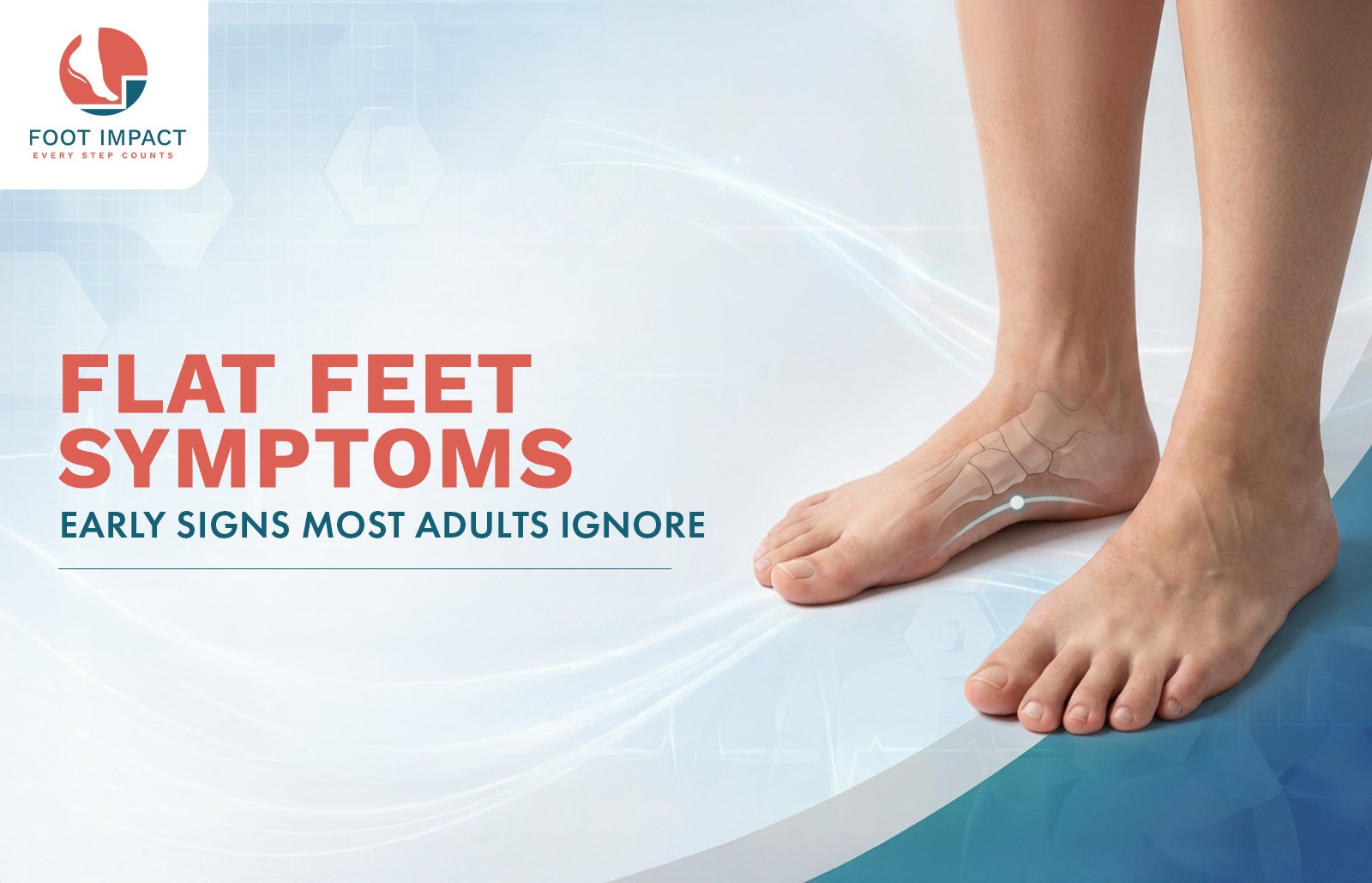
Identifying Flat Feet Symptoms: Early Signs Most Adults Ignore
Most of us take our feet for granted. We stand, walk, and run on them all day, rarely giving them a second thought—until they start to hurt. If you have noticed an aching in your arches or a strange tiredness in your legs after a short walk, you might be dealing with a condition known as pes planus, or fallen arches.
While many people are born with flat feet and live without pain, "adult-acquired flatfoot" is a different story. It develops over time and can trigger a domino effect of alignment issues throughout your body. Unfortunately, because the pain often radiates to the knees or back, many people miss the obvious flat feet symptoms right under their noses.
In this guide, we will break down the early warning signs, the hidden connections to other body pains, and what you can do to get back on your feet—pain-free.
What Does It Really Mean to Have Flat Feet?
Before we dive into the specific symptoms, let’s clear up a misconception. Having flat feet doesn't always mean your foot looks like a pancake against the floor.
Technically, "flat feet" refers to a condition where the arches on the inside of your feet flatten when pressure is put on them. When you stand up, the entire sole of your foot touches the floor.
The Two Main Types
It is helpful to understand which category you might fall into, as it affects the flat feet symptoms you experience:
Flexible Flat Foot: Your foot has an arch when you are sitting or on your tiptoes, but it disappears (flattens) the moment you stand on it. This is very common and often begins in childhood.
Rigid Flat Foot: The arch is missing regardless of whether you are sitting or standing. This is often related to bone or joint issues and can be more painful.
Expert Note: Just because you have flat feet doesn't mean you need surgery. Many adults have low arches and function perfectly fine. The problem begins when the structure fails to support your body weight, leading to inflammation and pain.
The Top 7 Flat Feet Symptoms You Shouldn't Ignore
Recognizing flat feet symptoms early can save you from months of physical therapy later. The signs aren't always limited to foot pain; they often manifest as fatigue or alignment issues.
1. Pain in the Arch and Heel
This is the hallmark sign. The posterior tibial tendon, which runs along the inside of your ankle and foot, is responsible for holding up the arch. When this tendon weakens or stretches, the arch collapses.
What it feels like: A sharp or dull ache along the inside of the foot or ankle. It is often worse during high-impact activities like running.
2. "Heavy" or Tired Legs
Do your legs feel unusually heavy after standing for just 20 or 30 minutes?
The Cause: When your arches collapse, your leg muscles have to work overtime to stabilize your body. This leads to rapid muscle fatigue, a classic but often overlooked flat feet symptom.
3. Swelling Along the Inner Ankle
If you notice puffiness on the inside of your ankle even when you haven't twisted it, take note. This swelling is often due to the strain on the tendons trying desperately to support the arch.
4. Uneven Shoe Wear
Go to your closet and grab an old pair of sneakers. Flip them over.
The Sign: If the inside of the sole (near the big toe and heel) is significantly more worn down than the outside, your feet are likely rolling inward excessively. This rolling motion is called overpronation.
5. Difficulty Standing on Tiptoes
This is a functional test doctors use. If you cannot easily perform a "single-leg heel raise" (standing on one foot and lifting your heel), or if it is painful to do so, your posterior tibial tendon may be compromised.
6. Back and Hip Pain
You might be treating your lower back for months without relief because the root cause is actually at the floor level.
The Connection: Flat feet cause your legs to rotate inward. This rotation tilts your pelvis forward, which increases the curve in your lower back, leading to chronic strain.
7. Toe Drift (Too Many Toes Sign)
Stand behind a friend and have them look at your heels from the back. In a normal foot, they should see only the fifth toe (pinky toe) and maybe half of the fourth toe.
The Sign: If they can see three or four toes peeking out from the side, your forefoot has abducted (drifted outward) due to the collapsing arch.
Why Do Arches Collapse in Adults?
You might be thinking, "I didn't have flat feet as a kid, so why do I have flat feet symptoms now?"
Adult-acquired flatfoot is increasingly common. It is rarely a sudden event; rather, it is wear and tear over decades.
For a deeper dive into how lifestyle impacts foot health, you can visit our main page at Foot Impact to explore preventative care.
The "Kinetic Chain": How Flat Feet Affect Your Whole Body
One of the most critical concepts in podiatry is the "Kinetic Chain." Think of your body as a stack of building blocks. If the bottom block (your feet) is tilted, every block above it—ankles, knees, hips, spine—has to tilt or rotate to keep you upright.
This is why flat feet symptoms are sneaky. You might visit a doctor complaining of knee pain (often "Runner's Knee" or patellofemoral pain syndrome). You might get treated for the knee, but the pain returns because the foot is still rolling inward, twisting the shinbone and torqueing the knee joint every time you take a step.
If you are experiencing unexplained knee or hip pain, checking your foot mechanics is a crucial step in the diagnostic process.
How Are Flat Feet Diagnosed?
If you suspect you have this condition, a visit to a podiatrist or orthopedic specialist is recommended. They won't just look at your feet; they will watch you walk.
Visual Exam
Visuall examination doctor will check in sitting as well as standing position.
Gait Analysis
Clinical gait analysis to check how the entire lower limb is compensated for your flat feet. This analysis can help to diagnose cause of multiple issues you are suffering with.
Imaging
To diagnose flat feet will not need a specific test as it's visible with naked eyes. Below tests will be needed if the doctor is suspecting any underlying musculoskeletal injury.
X-rays: To check for arthritis or bone misalignment.
MRI: To check the health of the posterior tibial tendon.
CT Scan: To get a detailed 3D look at the bone structure.
According to the American Academy of Orthopaedic Surgeons, early diagnosis is key. Catching the condition while the foot is still "flexible" usually means you can avoid surgery.
Treatment Options: From Insoles to Surgery
The good news is that most people who experience flat feet symptoms do not need surgery. Conservative treatments are highly effective if started early.
1. Custom Orthotics (Insoles)
Buying generic gel inserts at the pharmacy might provide cushion, but they rarely provide correction. Custom orthotics are molded to your specific foot shape. They physically hold the arch up, preventing the inward roll and relieving strain on the tendon.
Tip: If you are unsure where to start, browse our resources at Foot Impact to understand how proper support changes foot mechanics.
2. Supportive Footwear
Shoes matter. If you have flat feet, ballet flats and flip-flops are your enemies. You need shoes with:
A firm heel counter: The back of the shoe shouldn't squash down easily.
Arch support: Built-in contours.
Stability: The shoe shouldn't twist like a dishrag.
3. Physical Therapy & Exercises
Strengthening the muscles inside the foot can act as a natural brace. Common exercises include:
Towel Scrunches: Using your toes to bunch up a towel on the floor.
Calf Raises: Strengthening the posterior chain.
Heel Cord Stretching: Tight Achilles tendons often contribute to flat feet; stretching them can relieve pressure.
4. The RICE Method
For flare-ups of pain and swelling:
Rest: Stay off your feet.
Ice: Reduce inflammation.
Compression: Use a sock or wrap to control swelling.
Elevation: Keep the foot above heart level.
5. Surgery (The Last Resort)
If the pain is debilitating and conservative methods fail, surgery might be considered. This can range from cleaning the tendon (synovectomy) to cutting and shifting bones (osteotomy) or fusing joints (arthrodesis) to create a permanent arch.
Prevention: Can You Stop Arches from Falling?
While you can't change your genetics, you can influence the external factors that worsen flat feet symptoms.
Watch your weight: Even a small amount of weight loss reduces the force on your arches significantly.
Wear shoes indoors: Walking barefoot on hard tile or hardwood floors accelerates arch collapse. Wear supportive slippers or house shoes.
Manage Diabetes: If you are diabetic, tight blood sugar control helps protect the tendons and nerves in your feet.
Frequently Asked Questions (FAQ)
Here are the most common questions patients ask regarding fallen arches.
1. Are flat feet genetic?
Yes, in many cases, the structure of your foot is inherited. If your parents had flat feet, you are more likely to develop them. However, lifestyle factors like footwear and weight play a massive role in whether or not you develop painful flat feet symptoms.
2. Can flat feet be cured?
"Cured" is a tricky word. You cannot usually rebuild an arch naturally once it has collapsed without surgery. However, you can "manage" the condition perfectly. With the right orthotics and shoes, you can live a completely pain-free, active life without a visible arch.
3. Do flat feet disqualify you from the military or sports?
Historically, this was true. Today, it is less of an issue. As long as the flat feet are asymptomatic (not causing pain) and functional, they are rarely a disqualifying factor. Many elite athletes have flat feet!
4. What happens if I ignore the symptoms?
Ignoring the pain can lead to severe arthritis in the foot and ankle, chronic tendinitis, and permanent deformities that make wearing normal shoes impossible. It can also lead to chronic knee and back issues that are difficult to reverse.
Conclusion: Take the First Step Toward Relief
Flat feet are more than just a cosmetic quirk; they are a mechanical issue that influences how you move through the world. Whether you are dealing with a dull ache in your heel or unexplained back pain, understanding the early flat feet symptoms is the first step toward recovery.
You don't have to live with "heavy legs" or foot pain. By swapping your footwear, considering orthotics, and strengthening your feet, you can rebuild your foundation.
If you suspect your arches are causing your pain, don't wait for the condition to become rigid. Early intervention is always easier than fixing a long-term problem.
For more insights on foot health and finding the right care for your needs, explore the resources available at Foot Impact. Your feet support you every day—it’s time you supported them back.